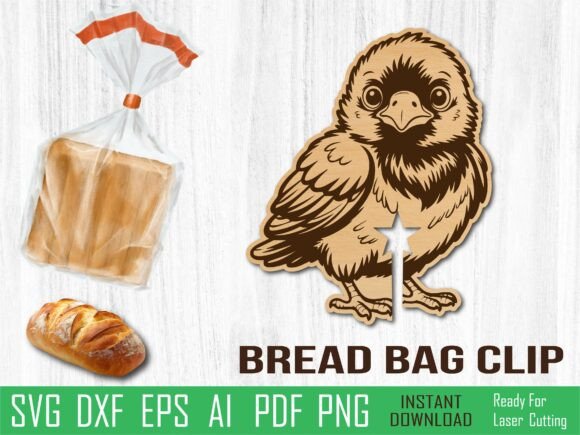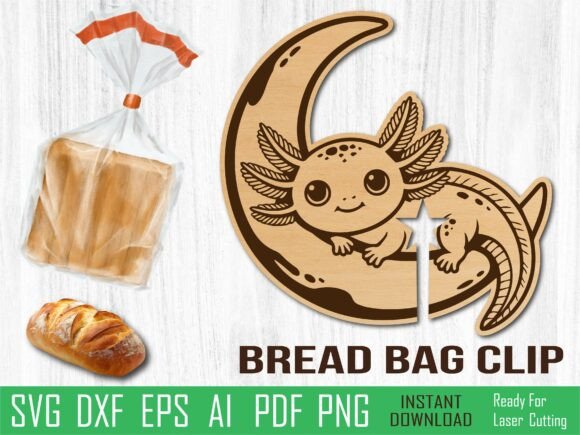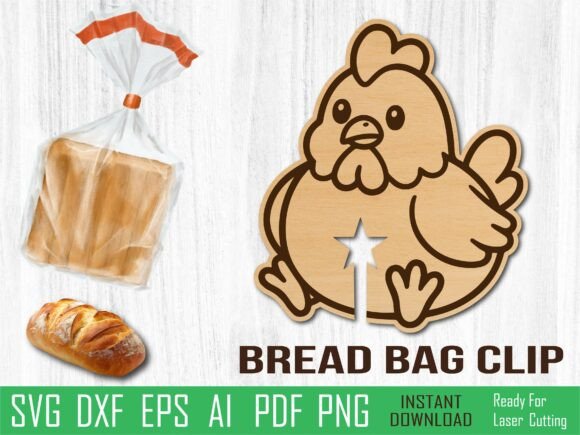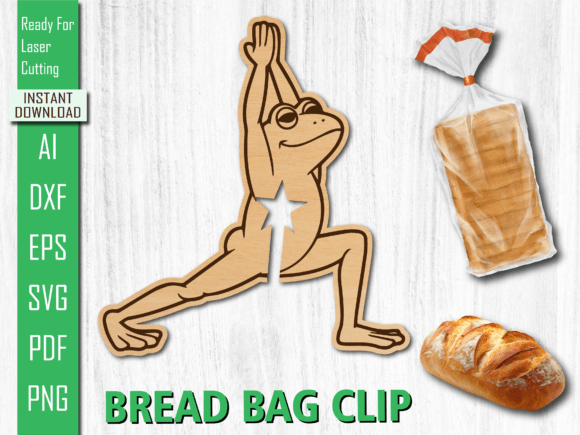
Bigfoot Bread Clip: A Designer's Practical Review
As a designer who has spent years navigating the fine line between whimsical concepts and functional finished products, I approach every new asset with a critical eye. When I first encountered the Bigfoot Bread Clip, Animal Laser Cut, my initial reaction was one of genuine amusement. It is rare to find a design that balances everyday practicality with such a cheeky sense of humor. While the product description explicitly highlights its suitability for laser cutting and CNC machines, my perspective shifts when considering how this concept translates into the realm of textile arts and commercial embroidery. For those of us running craft businesses or managing Etsy shops, understanding how a design like this performs in real-world scenarios is just as important as the digital file itself.
The Visual Personality and Mood
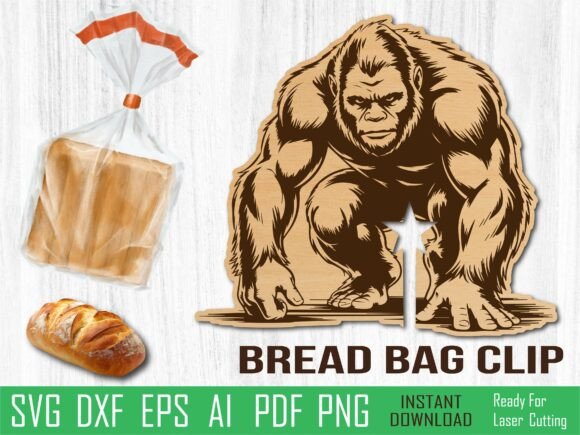
The first impression of the Bigfoot Bread Clip is one of playful disruption. In a sea of generic kitchen organizers, this design stands out immediately. The silhouette of Bigfoot holding a slice of bread creates an instant narrative. For an embroidery project, this visual personality is a double-edged sword. On one hand, it offers a unique selling point for personalized gifts and boutique branding. On the other, the character's distinct features require careful execution to maintain their charm. If you are planning to use this as a tote bag design or a graphic on a sweatshirt embroidery project, the layout must remain clean. The humor relies on the recognizability of the creature; if the stitch density is too high or the details are lost in translation, the joke falls flat.
Translating Laser Concepts to Stitched Reality
While the original asset is intended for Laser Cutting, the underlying shape is robust enough to be adapted into a machine embroidery design. Imagine preparing a custom embroidered tote bag for a craft fair. You want something that stops a customer mid-scroll. Placing the Bigfoot motif on a sturdy canvas tote works exceptionally well. The fabric texture of canvas provides a stable base, allowing the fill stitch to sit evenly without sinking into the weave. However, moving from a rigid material like wood or acrylic to soft textiles requires adjustments. You cannot simply convert a vector path directly into stitches without considering the hoop size and the necessary stabilizer.
When I visualize this as an embroidered patch, the potential becomes even clearer. Patches allow for dense stitching and intricate detailing that might be risky on stretchy fabrics. A patch featuring the Bigfoot Bread Clip could be sewn onto denim jackets, backpacks, or even used as a decorative accent on aprons for a kitchen-themed gift set. The key here is ensuring that the "bread" portion of the design doesn't get lost. In embroidery, small, isolated areas often require a different stitch type than larger bodies. Using a combination of satin stitch for outlines and fill stitch for the body can create depth, making the design pop off the fabric.
Navigating Fabric Challenges
Not all projects are created equal. As a professional reviewer, I must advise caution when applying this design to certain materials. If you attempt to embroider the Bigfoot Bread Clip on thin fabric or highly textured surfaces, the result may be disappointing. Thin fabrics tend to pucker under the tension of the needle, distorting the shape of the animal. Similarly, stretchy fabrics like jersey knit require significant stabilization to prevent the design from warping after washing. For custom apparel made from these materials, a cutaway stabilizer is non-negotiable.
Furthermore, consider the background color. The design assets work best with high contrast. If you are using dark thread on a dark fabric, the details of Bigfoot's fur and the bread will disappear. Always test your thread colors against your chosen fabric before committing to a full production run. This is especially true for holiday embroidery projects where the item might be displayed prominently. A black-on-black version might look sleek in a printable mockup, but in person, it will lack the visual impact needed to drive sales.
Commercial Viability and Customer Engagement
For the Etsy seller or small shop owner, the question is always about value. Does this design elevate the finished product? Absolutely. The Bigfoot Bread Clip adds a layer of personality that mass-produced items lack. It signals to the buyer that they are purchasing a handmade product with thought behind it. Whether it is a baby item with a scaled-down version of the character or a humorous gift for a friend who loves cryptids, the emotional connection drives engagement.
However, professionalism matters. If you are creating commercial embroidery for a client, ensure the design is crisp. Blurry edges or loose threads can destroy customer trust. Before listing any item, inspect the back of the stitching. Excessive jump stitches or poor trimming can make the back of a garment look messy, which reflects poorly on your brand consistency. Use proper backing and trim diligently. This attention to detail separates a hobbyist from a professional decorator.
Practical Notes for the Designer
If you decide to adapt this concept for your own work, follow these practical steps:
- Test on Scrap Fabric First: Never skip this step. Run a test on the exact fabric and stabilizer you plan to use to check for puckering and alignment.
- Review Stitch Density: Ensure the fill stitch isn't too dense, which can cause the fabric to stiffen, or too sparse, which leaves gaps.
- Confirm Licensing: Even though the original is a laser cut file, if you are adapting it for embroidery, verify the license terms. Can you sell the finished items? Can you resell the digital embroidery file?
- Check Hoop Size: Make sure the design fits within your machine's hoop without needing to reposition, which can lead to registration errors.
- Compare Light and Dark Backgrounds: Create mockups to see how the design reads on different colored garments.
Final Thoughts on Design Assets
The Bigfoot Bread Clip, Animal Laser Cut is more than just a kitchen organizer idea; it is a versatile design asset that, with the right adaptation, can thrive in the world of embroidery. It offers a perfect blend of humor and utility, making it ideal for personalized gifts, small business merchandise, and creative entrepreneurial projects. By respecting the limitations of fabric and thread, and by prioritizing quality in every stitch, you can transform this digital concept into a tangible product that customers will love. Whether you are decorating a cap, a pillow cover, or a tea towel, the key is to let the design's personality shine through while maintaining the technical integrity of your craft.