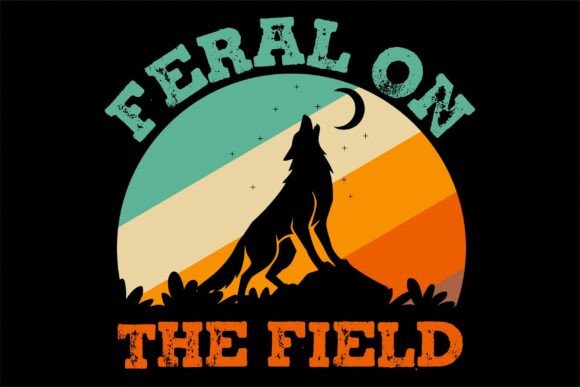
Feral on the Field: A Designer's Review
As someone who has spent years translating digital graphics into tangible stitched goods, I approach every new design file with a mix of excitement and skepticism. The gap between a crisp vector image and a successful machine embroidery design is often where projects fail. When I first opened the file for Feral on the Field, my immediate goal was to determine if this piece of art could survive the rigors of real-world production. This isn't just about whether it looks good on a screen; it is about how it behaves under the needle, how it holds up after washing, and whether it adds genuine value to a handmade product.
The Visual Impact and Design Personality
The first thing that strikes you about Feral on the Field is its raw energy. Unlike many generic T-Shirt Designs that rely on soft curves and safe aesthetics, this graphic leans into a bolder, more aggressive style. The layout suggests movement and intensity, making it an excellent candidate for custom apparel aimed at outdoor enthusiasts, sports fans, or those who appreciate edgy streetwear. The visual weight is distributed well, which is crucial when converting a Graphics file into an embroidery file. If the original design had too much negative space in critical areas, the stitching would look patchy; however, the density here appears balanced enough to support a robust fill stitch without overwhelming the fabric.
For a designer, the mood created by this piece is distinct. It feels like a statement. It is not the kind of design you would shyly place on the hem of a baby onesie. Instead, it demands attention on the front chest of a heavy cotton sweatshirt or as a large back print on a canvas tote bag. The lines are confident, suggesting that the stitch density will be high enough to create a solid texture, yet open enough to prevent puckering on medium-weight fabrics.
A Real-World Application: The Heavyweight Hoodie Test
To truly evaluate Feral on the Field, I imagined a specific scenario: preparing a limited-run batch of heavyweight hoodies for a local boutique client. The client wanted something that felt "feral" and untamed, perfect for their autumn collection. In this context, the design becomes the focal point of the entire garment.
When planning this embroidery project, the decision to use a thick stabilizer is non-negotiable. Because the design likely features bold outlines and potentially intricate internal details, the tension from the needle needs to be managed carefully. I would recommend hooping the hoodie sleeve or using a floating method with a tear-away stabilizer specifically designed for knits. The goal is to ensure the fabric does not stretch during stitching, which can distort the shape of the "feral" elements. Once stitched, the result should be a raised, textured badge that feels substantial against the fleece interior of the sweatshirt. Customers buying this finished product expect durability; they want to feel the quality of the thread and the precision of the stitch.
This design also translates beautifully to embroidered patches. Imagine creating a set of iron-on patches featuring Feral on the Field for denim jackets or backpacks. The bold nature of the graphic means it will stand out even when scaled down slightly, provided the smallest details do not become indistinguishable. For a craft business selling on Etsy, these patches could serve as high-margin add-ons, increasing the perceived value of a simple denim jacket.
Navigating Fabric Challenges and Limitations
While Feral on the Field is versatile, it is not a universal solution for every material. As an experienced decorator, I must advise caution when applying this design to thin or highly stretchy fabrics. The stitch density required to render the details clearly could cause significant puckering on a lightweight linen shirt or a sheer blouse. Similarly, while dark fabrics offer great contrast, the thread colors used in the design must be chosen carefully to ensure visibility. If the design relies heavily on light tones, a dark background might require a backing layer of tonal fill to make the image pop.
Curved surfaces, such as baseball caps, present another challenge. The rigid structure of a cap requires a specialized hoop and careful digitization adjustments. If the design contains long, straight horizontal lines, they may ripple on a curved brim. Before committing to a full run of caps, it is essential to test the design on a scrap piece of similar fabric or a spare cap blank. This step ensures that the running stitch and satin stitch elements flow naturally with the curve rather than fighting against it.
Strategic Considerations for Sellers and Makers
For Etsy sellers and small shop owners, the success of a listing often hinges on presentation. Using Feral on the Field allows you to create compelling printable mockups that showcase the design in action. However, honesty is key. Do not promise a level of detail in your photos that the actual stitching cannot achieve. If the design includes tiny lettering or fine textures, customers need to know that these elements will have a specific embroidered texture, not a printed smoothness.
Furthermore, the commercial viability of this design depends on proper licensing. Since this comes from a professional store, it is vital to confirm whether the license covers commercial embroidery for resale. Some licenses allow for personal use only, while others permit the sale of finished items but restrict the resale of the digital embroidery file itself. Always verify these terms before launching a product line. Selling a personalized gift or a holiday embroidery item based on unlicensed assets can lead to account suspensions and legal issues.
Practical Tips for Execution
If you decide to move forward with Feral on the Field, follow these practical steps to ensure a professional outcome:
- Test on Scrap Fabric: Never skip the test run. Stitch the design on a piece of the exact fabric you plan to use to check for puckering and alignment.
- Check Thread Contrast: Ensure the thread colors provide sufficient contrast against the fabric. Low contrast can make the design appear muddy or unfinished.
- Review Hoop Size: Confirm that your machine's hoop size can accommodate the full width and height of the design without cropping any elements.
- Inspect Small Details: Zoom in on the digitized file to ensure no tiny gaps exist where threads might break or tangle.
- Use Proper Stabilizer: Invest in high-quality stabilizers. Cheap stabilizers can leave residue or fail to support the weight of dense stitching.
- Compare Backgrounds: Test the design on both light and dark fabric swatches to see how it performs in different contexts.
Final Verdict on Commercial Value
In conclusion, Feral on the Field is a strong contender for designers looking to expand their portfolio with bold, character-driven pieces. Its ability to transform a standard sweatshirt or tote bag into a statement piece makes it a valuable asset for small business merchandise. However, its success relies entirely on the skill of the embroiderer and the quality of the materials used. By respecting the limitations of the fabric, choosing the right stabilizer, and adhering to licensing agreements, you can turn this design asset into a best-selling item that builds customer trust and brand recognition.
Whether you are creating a one-off personalized gift or scaling up for a holiday collection, the key is to treat the design with the care it deserves. When executed correctly, the result is a finished product that stands out in a crowded market, proving that thoughtful craftsmanship still matters in the world of mass-produced apparel decorators.