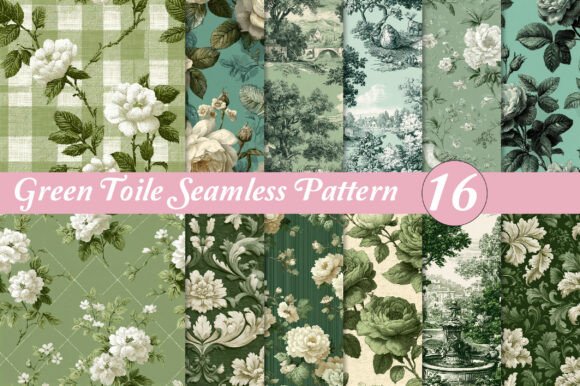
Green Toile Seamless Pattern: A Designer Review
As a designer who has spent years navigating the intersection of digital art and physical stitching, I approach every new asset with a critical eye. When I first encountered the Green Toile Seamless Pattern, my immediate reaction was one of cautious optimism. The classic toile motif is a staple in textile design, offering a timeless elegance that never truly fades. However, the transition from a digital graphic to a tangible finished product is where many projects stumble. This review isn't just about whether the image looks good on a screen; it is about how this specific Graphics file translates into real-world applications for small business owners, Etsy sellers, and crafters looking to elevate their brand.
The First Impression: Mood and Visual Personality
At first glance, the Green Toile Seamless Pattern exudes a sense of refined nature. The color palette suggests freshness without being overwhelming, making it an excellent candidate for spring collections or nursery-themed items. The layout features the traditional pastoral scenes found in toile designs—trees, birds, and perhaps subtle architectural elements—all rendered in a way that suggests continuity. For a designer, this seamless quality is crucial. It implies that the pattern can tile infinitely, which is perfect for creating large-scale backgrounds on pillow covers, table runners, or even the lining of a custom tote bag.
However, as I zoomed in to analyze the detail level, I noticed something important. The lines are crisp, but they rely heavily on the resolution of the output method. Since these are PNG files designed specifically for Sublimation projects or for printing, they are not vector-based. This distinction changes everything regarding how we approach the project. If you are planning to use this as a direct machine embroidery design, you cannot simply import the PNG into your digitizing software and expect a clean result. The lack of layers means you lose the ability to separate foreground elements from the background easily, which is often necessary for complex embroidery file creation.
Real-World Application: From Screen to Stitch
Let's imagine a practical scenario. You run a boutique shop specializing in personalized home goods, and you want to create a limited run of kitchen tea towels featuring this Green Toile Seamless Pattern. Your goal is to offer a high-end, handmade feel that justifies a premium price point. In this context, the pattern shines when used correctly. Because it is optimized for sublimation, the best route here is to print the design onto a polyester-blend fabric using a heat press before stitching any accents.
If you attempt to embroider directly over a printed version of this pattern, you must be strategic. The intricate details of a toile design can get lost if the stitch density is too high. Imagine trying to replicate those fine branches and leaves with fill stitch on a textured fabric like canvas. The result could look muddy rather than detailed. Instead, I would recommend using this pattern as a base layer for an applique design. Print the Green Toile Seamless Pattern on a stable fabric, cut out the main shapes, and then use satin stitch borders to define the edges. This technique adds depth and texture, transforming a flat print into a tactile handmade product that customers will love to touch.
Where This Design Excels
- Custom Apparel: When sublimated onto sweatshirts or t-shirts, the seamless nature allows the pattern to wrap around the garment beautifully, creating a cohesive look that feels professionally branded.
- Home Decor: Pillow covers and blankets benefit immensely from the repeating motif. The green tones pair well with neutral linens, making it a versatile choice for boutique branding.
- Baby Items: The softness of the green hue makes it ideal for baby embroidery projects, such as receiving blankets or bibs, provided the printing process uses safe, non-toxic inks.
- Digital Mockups: Even if you aren't producing physical goods yet, this digital product is excellent for creating printable mockup presentations to show clients what a potential collection could look like.
Critical Considerations for Crafters and Sellers
While the aesthetic appeal is strong, there are significant limitations you must navigate. The product description explicitly states: "These are NOT SVG files and are not layered." This is a vital piece of information for anyone intending to use this for commercial embroidery. Without vector paths, you cannot resize the design without losing quality, nor can you easily manipulate individual elements to fit a specific hoop size.
If you are a hobbyist attempting to turn this into an embroidered patch, you will face challenges. The intricate details of the toile style require precise digitization. If you try to force a raster image (PNG) into an embroidery machine without professional conversion, you risk thread breaks, puckering, and a loss of definition. The running stitch or fill stitch might not capture the delicate curves of the trees and figures effectively, resulting in a blocky appearance that undermines the elegance of the original Green Toile Seamless Pattern.
Fabrics and Surfaces to Approach with Care
Not all materials are created equal when working with this type of pattern. Here is where I advise extra caution:
- Textured Fabrics: On linen or heavy cotton, the fine details of the toile may get swallowed by the weave. Ensure your stabilizer is robust enough to support the weight of the ink or thread.
- Stretchy Fabric: Sublimation works best on synthetic blends. Using this on 100% cotton stretch fabrics can lead to cracking or fading after washing.
- Dark Backgrounds: The green tones in this pattern are likely optimized for light substrates. Attempting to use them on dark fabric without proper underbase preparation will result in muted, dull colors.
- Curved Surfaces: Applying a seamless pattern to caps or hats requires careful mapping. Distortion can occur at the seams, breaking the illusion of the continuous design.
Practical Notes for Professional Execution
To ensure your project succeeds, follow these steps before committing to a full production run. First, always test the design on scrap fabric. Whether you are sublimating or attempting to digitize for embroidery, seeing how the ink or thread interacts with the material is non-negotiable. Check your thread colors against the printed sample to ensure contrast is sufficient for readability.
If you decide to convert this for embroidery, review the stitch density carefully. Too much thread in a small area will cause the fabric to pucker, ruining the smooth flow of the Patterns. Confirm your hoop size early on; a seamless pattern often requires larger hoops to maintain the scale of the design elements. Finally, inspect the small details. In a toile design, a missing leaf or a broken branch can ruin the entire visual narrative.
For those selling on Etsy or running a craft business, consider the licensing implications. While the files are great for personal projects, always confirm the terms before selling finished items or reselling the digital embroidery file itself. Customer trust is built on professionalism, and using assets correctly is part of that promise.
Final Verdict on Value and Appeal
The Green Toile Seamless Pattern is a beautiful asset that brings a touch of classic charm to modern crafting. Its value lies in its versatility for sublimation and printing, offering a sophisticated backdrop for personalized gifts and small shop products. However, it demands respect for its format. It is not a plug-and-play solution for direct embroidery without significant adaptation.
For the savvy designer willing to work within its constraints, this pattern offers a unique opportunity to create high-value, visually stunning products. By understanding the limitations of PNG files and leveraging the strengths of sublimation, you can produce items that stand out in a crowded market. Whether you are decorating a holiday gift, a wedding favor, or a line of custom apparel, this design has the potential to elevate your work—if you know exactly how to wield it.