Cute Spring Bear Couple Clipart Review
As a designer who has spent years navigating the intersection of digital art and physical thread, I approach every new asset with a critical eye. When I first opened the file for Cute Spring Bear Couple Clipart, my initial reaction was one of warmth. The visual personality is undeniably charming, capturing that soft, whimsical mood that defines springtime crafting. However, before I can recommend this to my fellow crafters or use it in my own shop, I need to look past the pretty pixels and understand how it translates into a real-world project.
The First Impression: Mood and Visual Weight
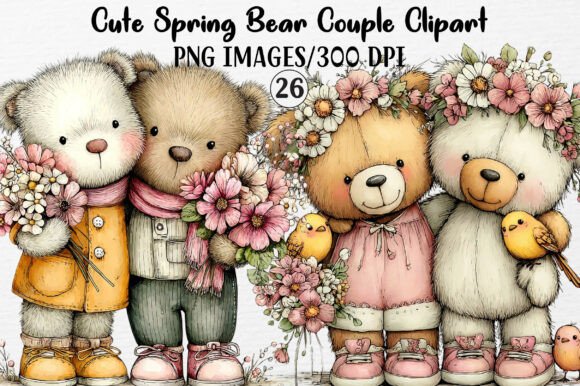
The design features two bears interacting in a way that feels intimate and playful. In the world of Illustrations and Graphics, this kind of character-driven art usually performs well on baby items, nursery decor, and personalized gifts. The shapes are rounded and friendly, avoiding sharp angles that might cause issues during digitization. If you are an Etsy seller looking to refresh your inventory for the upcoming season, this clipart offers a strong emotional hook. It screams "spring," which is exactly what customers are searching for when they want to update their wardrobe or home decor after winter.
However, there is a crucial caveat that any professional must address immediately. The product description explicitly states that these are PNG files designed specifically for sublimation projects or printing. They are NOT SVG files and are not layered. This distinction changes everything for those of us working in machine embroidery. While the image looks perfect on a screen, it is not a native machine embroidery design. To use this as an embroidery file, you would need to run it through a digitizing process to convert the raster image into stitch data.
Real-World Application: From Screen to Stitch
Let's imagine a specific scenario: I am preparing a custom embroidered tote bag for a local boutique client who wants a limited-run collection for Mother's Day. The concept involves placing the Cute Spring Bear Couple Clipart on a natural canvas tote. Because the original file is a flat PNG, I cannot simply load it into my machine. I have to treat this as a source image for digitization.
If I were to hire a digitizer or do the work myself, the goal would be to preserve the softness of the bears while ensuring the stitch density remains manageable. On a canvas tote, the fabric texture is relatively forgiving, but if I wanted to use this on a sweatshirt, the stretchy nature of the knit would require careful attention to the hoop size and stabilizer choice. A standard 5x7 hoop might be too large for a centered chest placement on a child's shirt, so scaling down becomes necessary. When scaled down, small details in the bears' faces could get lost unless the digitizer uses a high-quality fill stitch rather than a running stitch for the main bodies.
Navigating Fabric Challenges
Not all fabrics play nice with complex imagery. If you plan to use this design on thin fabric like a lightweight t-shirt, the thread colors and density will need to be adjusted to prevent puckering. Dark fabrics present another challenge; since the original PNG likely relies on white or light outlines, stitching those same lines onto a black hoodie requires a bright, contrasting thread, such as neon yellow or white, to maintain visibility. Without proper contrast, the finished product might look muddy rather than crisp.
For those considering this for an embroidered patch, the design holds up well. Patches allow for higher stitch counts because the backing stabilizer is dense. You could potentially add a satin stitch border around the bears to give them a finished, professional look. This would elevate the item from a simple craft to a high-end boutique product. However, remember that patches often undergo frequent washing and friction, so the digitized version must lock stitches securely to prevent unraveling over time.
Strategic Use Cases for Small Businesses
For the Etsy seller or small shop owner, understanding the limitations of the source file is key to profitability. Since this is a printable graphic at its core, it shines brightest in hybrid projects. You could print the Cute Spring Bear Couple Clipart using sublimation on a hard surface like a mousepad or phone case, and then embroider a small accent nearby, such as a tiny flower or a name. This combination leverages the strengths of both mediums.
If you are strictly focused on commercial embroidery, you must ensure you have the rights to digitize and sell the resulting designs. Even if the PNG license allows for commercial use of the printed image, creating a derivative digital embroidery file might require additional permissions. Always confirm licensing before selling finished items or offering the design as a download to other makers.
Design Integrity and Customer Trust
When I review a design for my own business, I ask: Does this build trust? A poorly executed embroidery job can ruin a garment, leading to negative reviews and returns. The Cute Spring Bear Couple Clipart has a clean layout that suggests it will digitize well, provided the artist respects the original proportions. Avoid cramming too much detail into a small area. Instead, focus on the silhouette and the interaction between the two bears. This ensures that even from a distance, the customer recognizes the charm of the piece.
For holiday gifts or wedding favors, this design fits perfectly. Imagine a set of kitchen towels where the bears are embroidered near the hem, paired with a sublimated floral background. The mix of textures—soft thread against printed ink—adds depth and value to the gift. It signals to the buyer that thought went into the creation, distinguishing your handmade product from mass-market alternatives.
Practical Designer Notes for Success
Before committing to a full production run, follow these steps to ensure quality:
- Test on Scrap Fabric: Never skip the test run. Digitize the design and stitch it on a scrap piece of the exact fabric you plan to use. Check for puckering, registration issues, and color accuracy.
- Check Thread Contrast: Ensure the thread colors pop against the background. If the design is intended for dark garments, consider reversing the colors or adding a blockout layer in the digitizing phase.
- Verify Hoop Size: Measure the design dimensions carefully. If the file is large, determine if it fits within your machine's maximum hoop size without distorting the aspect ratio.
- Inspect Small Details: Zoom in on the eyes and paws of the bears. These areas often require fine needles and precise tension settings to avoid thread breaks.
- Use Proper Stabilizer: For stretchy fabrics like sweatshirts, use a tear-away or cut-away stabilizer that supports the weight of the thread without restricting the fabric's movement.
- Review Licensing: Double-check the terms of use for the PNG file. Ensure you are allowed to create derivative works like embroidery patterns for resale.
Final Thoughts on Value and Versatility
While Cute Spring Bear Couple Clipart starts as a digital graphic for printing, its potential in the world of textiles is significant if handled correctly. It offers a sweet, seasonal aesthetic that resonates with buyers looking for personalized gifts and cozy home goods. By respecting the technical requirements of embroidery and taking the time to digitize responsibly, you can transform this simple PNG into a high-value asset for your craft business.
Whether you are decorating a baby blanket, creating a unique apron, or stocking your shop with fresh spring merchandise, the key lies in execution. Treat the design with care, test thoroughly, and let the charm of the bears shine through the thread. With the right approach, this illustration can become a signature piece in your portfolio, proving that even a non-layered PNG can inspire beautiful, tangible creations.